This whisky glossary explains more than 80 terms in plain English, from ABV and angel's share to wash, wort and yeast. Use it when a label, a shop assistant or a tasting note uses a word you do not know. Each definition is short, and many link to our deeper guides. We also cover a few terms that matter only in Malaysia, such as setem cukai, the excise tax stamp. Think of this whisky glossary as a quick reference to keep open while you shop or taste.
How to use this whisky glossary
Jump to a letter with the links below, then scan the terms. For the legal rules behind Scotch, see the Scotch Whisky Regulations 2009. For how whisky is made, the Scotch Whisky Association has a clear overview. Then come back to this whisky glossary when a new word turns up. Also, each term has its own anchor, so you can share a link to a single entry in this whisky glossary.

If you are just starting out, read our types of whisky guide first. It gives you the big picture, and this whisky glossary fills in the details. Many entries in this whisky glossary also appear on labels in Malaysian shops, so it helps when you compare bottles.
A
- ABV
- Alcohol by volume: the share of the liquid that is pure alcohol. Scotch must be bottled at 40% ABV or more.
- Age statement
- The age on the label. For Scotch, it is the age of the youngest whisky in the bottle, not the average.
- American oak
- Oak from the US, used for most bourbon barrels. It tends to give vanilla, coconut and caramel notes.
- Whisky lost to evaporation as it ages in the cask. Hot climates lose far more each year than Scotland does.
B
- Barley
- The cereal behind all malt whisky. It is malted, dried and milled before mashing.
- Batch
- One production run. "Small batch" on a label means the whisky comes from a limited number of casks, but there is no fixed legal size.
- Blended malt
- A mix of single malts from two or more distilleries, with no grain whisky. Monkey Shoulder is one example.
- Blended Scotch whisky
- A mix of malt and grain whiskies from several distilleries. Most Scotch sold worldwide is blended. See our blended Scotch guide.
- Bottled in bond
- A US label term: whiskey from one distillery and one distilling season, aged at least four years and bottled at 100 proof (50% ABV).
- Bourbon
- American whiskey made from at least 51% corn and aged in new charred oak containers. Read our bourbon whiskey guide.
- Butt
- A large cask of about 500 litres, often used for sherry before it holds whisky.
C
- Cask
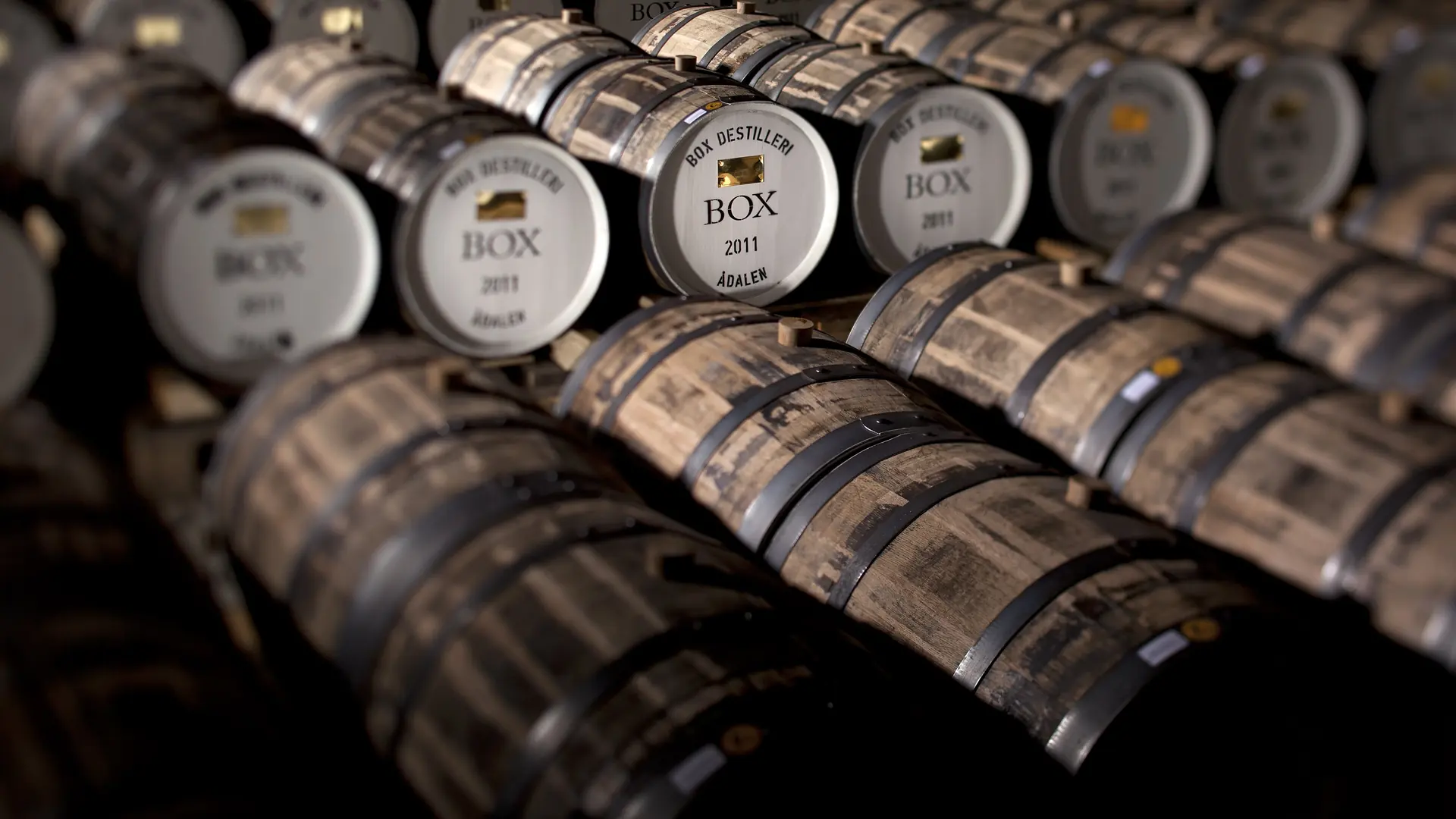
- A wooden barrel, almost always oak, in which whisky matures. The cask gives much of the colour and flavour.
- Cask strength
- Whisky bottled at or near the strength it had in the cask, without adding water. It is often above 50% ABV.
- Chill filtration
- Cooling whisky and passing it through a fine filter, so it will not turn cloudy with ice or water. Some drinkers prefer non-chill-filtered whisky for its fuller texture.
- Coffey still
- A column still that runs nonstop, patented by Aeneas Coffey in 1830. Distillers use it for most grain whisky.
- Cooperage
- A workshop where coopers make, repair and char casks.
- Copper
- The metal used for stills. It removes harsh sulphur notes from the spirit.
- Cut
- The points where the stillman separates the foreshots, the heart and the feints during the second distillation.
D
- Draff
- The spent grain left after mashing. Farms often use it as cattle feed.
- Dram
- A Scottish word for a measure of whisky. It has no fixed size.
E
- European oak
- Oak from Spain or elsewhere in Europe, common in sherry casks. It tends to give spice, dried fruit and more tannin.
- Ex-bourbon cask
- A barrel that held bourbon before whisky. It is the most common cask type for Scotch and gives vanilla and honey notes.
- Expression
- One bottling within a brand's range, such as a 12-year-old or a sherry cask edition.
F
- Feints
- The last part of the spirit run, also called tails. Distillers collect it and distil it again.
- Finish
- Two meanings. First, extra time in a second cask, such as a port or sherry finish. Second, the flavour that stays after you swallow.
- First fill
- A cask filled with Scotch for the first time after holding bourbon or sherry. It gives more flavour than a refill cask.
- Foreshots
- The first part of the spirit run, also called heads. It is too harsh to keep, so distillers send it back for redistillation.
G
- Grain whisky
- Whisky made mainly from wheat or maize, usually in a column still. It is lighter than malt and forms the base of most blends.
- Grist
- Malted barley milled into a coarse flour, ready for mashing.
H
- Highball
- Whisky topped with soda water over ice in a tall glass. See our whisky cocktails page for the ratio.
- Hogshead
- A cask of about 250 litres, often rebuilt from bourbon barrels.
I
- Independent bottler
- A company that buys casks from distilleries and bottles them under its own label.
- Islay
- A Scottish island known for smoky, peated malts, such as Laphroaig, Lagavulin and Ardbeg.
L
- Legs
- The streaks that run down a glass after you swirl whisky. They hint at strength and texture, not quality.
- Lincoln County Process
- Filtering new spirit through sugar-maple charcoal before ageing. It defines Tennessee whiskey such as Jack Daniel's.
- Low wines
- The weak spirit from the first distillation in the wash still, usually around 20–25% ABV.
- Lowland
- A Scotch whisky region in the south of Scotland, known for light, gentle malts.
M
- Malt
- Barley that has been soaked, allowed to sprout and then dried. Also short for malt whisky.
- Malting
- Soaking barley, letting it sprout, then drying it in a kiln. This turns the starch into a form that can become sugar.
- Mash bill
- The grain recipe of an American whiskey, such as 70% corn, 20% rye and 10% malted barley.
- Mash tun
- A large vessel where grist mixes with hot water to release sugars.
- Master blender
- The expert who chooses and combines casks to keep a whisky's style consistent.
- Maturation
- The time whisky spends ageing in wood. Scotch must mature for at least three years in oak.
- Mizunara
- A rare Japanese oak. It is hard to work with and often gives incense or sandalwood notes. Chivas Regal Mizunara uses it as a finish.
N
- NAS
- No Age Statement. The label gives no age, although the whisky still meets the legal minimum.
- Neat
- Whisky served on its own at room temperature, with no ice or mixer.
- New make spirit
- The clear spirit that comes off the still before ageing. In Scotland, it cannot be called whisky until it has aged for three years.
- Nose
- The aroma of a whisky, or the act of smelling it.
O
- Oloroso
- A rich, nutty style of sherry. Oloroso casks give dried fruit and spice to whisky.
- On the rocks
- Whisky poured over ice. Our guide on how to drink whisky compares it with other serves.
P
- Palate
- The taste and texture of whisky in your mouth.
- Peat
- Partly rotted plant matter dug from bogs. Burning it to dry malt gives whisky a smoky flavour.
- Pot still
- A copper still that works in batches. Scotch single malt must come from pot stills.
- PPM
- Phenol parts per million, a measure of how heavily the malt was peated. Higher numbers usually mean smokier whisky.
- Proof
- An older way to show strength. In the US, proof is double the ABV, so 80 proof equals 40% ABV.
- PX
- Pedro Ximénez, a very sweet sherry. PX casks give rich raisin and toffee notes.
Q
- Quarter cask
- A small cask, roughly a quarter of a butt. More wood contact speeds up maturation.
R
- Refill cask
- A cask that has already held Scotch at least once. It gives gentler flavour than a first-fill cask.
- Rye whiskey
- In the US, whiskey made from at least 51% rye. It is often spicier than bourbon. See our rye whiskey guide.
S
- Setem cukai
- The Malaysian excise tax stamp on legally imported alcohol. You can scan it with the Setem Cukai app from the Royal Malaysian Customs Department.
- Sherry cask
- A cask that held sherry before whisky. It gives dried fruit, spice and a darker colour.
- Single cask
- Whisky from one cask only, not mixed with any other. Each bottling differs, and many are cask strength.
- Single grain
- Grain whisky from one distillery, such as The Chita.
- Single malt
- Malt whisky from one distillery, made from malted barley. Read our single malt whisky guide.
- Solera
- A system from sherry making. Casks are partly emptied and topped up, so old and young spirit mix over time.
- Sour mash
- Adding some spent mash from an earlier run to a new batch. It keeps American whiskey consistent from batch to batch.
- Speyside
- The Scotch region with the most distilleries, home to Glenfiddich, Macallan and Glenlivet.
- Spirit safe
- A locked, glass-fronted box where the stillman checks the spirit and makes the cut without touching it.
- Spirit still
- The second still in malt distilling. It turns low wines into new make spirit.
- Straight whiskey
- A US term for whiskey such as straight bourbon or rye, aged at least two years with no added colour or flavour.
As you can see, S is the longest letter in this whisky glossary, because so many cask and style words start with it.
T
- Tennessee whiskey
- Whiskey made in Tennessee that goes through the Lincoln County Process before ageing.
- Triple distillation
- Distilling three times instead of two, for a lighter spirit. It is common in Irish whiskey.
U
- Uisge beatha
- Gaelic for "water of life". The word "whisky" comes from it.
V
- Vatting
- Mixing whiskies together in a vat before bottling. "Vatted malt" is an old name for blended malt.
- Virgin oak
- A new cask that has never held any liquid. It gives strong wood and vanilla flavour.
W
- Wash
- The beer-like liquid after fermentation, usually about 8% ABV. It goes into the wash still.
- Wash still
- The first, larger still in malt distilling. It turns wash into low wines.
- Washback
- The tank where wort and yeast ferment into wash.
- Wheated bourbon
- Bourbon that uses wheat instead of rye as its second grain, for a softer taste. Maker's Mark is one example.
- Wort
- The sweet liquid drained from the mash tun, before yeast is added.
Y
- Yeast
- A tiny fungus that turns sugar into alcohol during fermentation. Strains also add fruity flavours.
More from this whisky glossary
If a term is missing from this whisky glossary, our guides may cover it, because they go deeper on the ideas above. So treat this whisky glossary as a starting point. For example, the how to drink whisky guide covers neat, water and ice. Also, our where to buy whisky guide covers how to buy safely in Malaysia.
We hope this whisky glossary makes labels and tasting notes easier to follow. Above all, enjoy whisky slowly and responsibly. In Malaysia, you must be at least 21 to buy alcohol.
Frequently asked questions
What does cask strength mean?
Cask strength means the whisky is bottled at, or close to, the strength it had in the cask, without adding water. It is often above 50% ABV, so many people add a few drops of water.
What does NAS mean on a whisky label?
NAS stands for No Age Statement. The label does not say how old the whisky is. It still has to meet the legal minimum age, which is three years for Scotch.
Does the age statement refer to the youngest whisky?
Yes. For Scotch, the age on the label is the age of the youngest whisky in the bottle. A 12-year-old blend may contain older whiskies too.
What is the angel's share?
The angel's share is the whisky lost to evaporation while it ages in the cask. Warm climates lose more each year than cool ones, which is why whisky ages faster in places such as Taiwan and India.
Does whisky keep ageing in the bottle?
No. Whisky only matures in wood. Once bottled, its age stays the same, although an opened bottle can slowly lose aroma.
Which whisky terms should a beginner learn first?
Start with five entries in this whisky glossary: ABV, age statement, single malt, blended Scotch and cask strength. Together, they explain most of what you see on a whisky label.
What is setem cukai?
Setem cukai is the Malaysian excise tax stamp on legally imported alcohol. You can check it with the Royal Malaysian Customs Department's Setem Cukai app.


